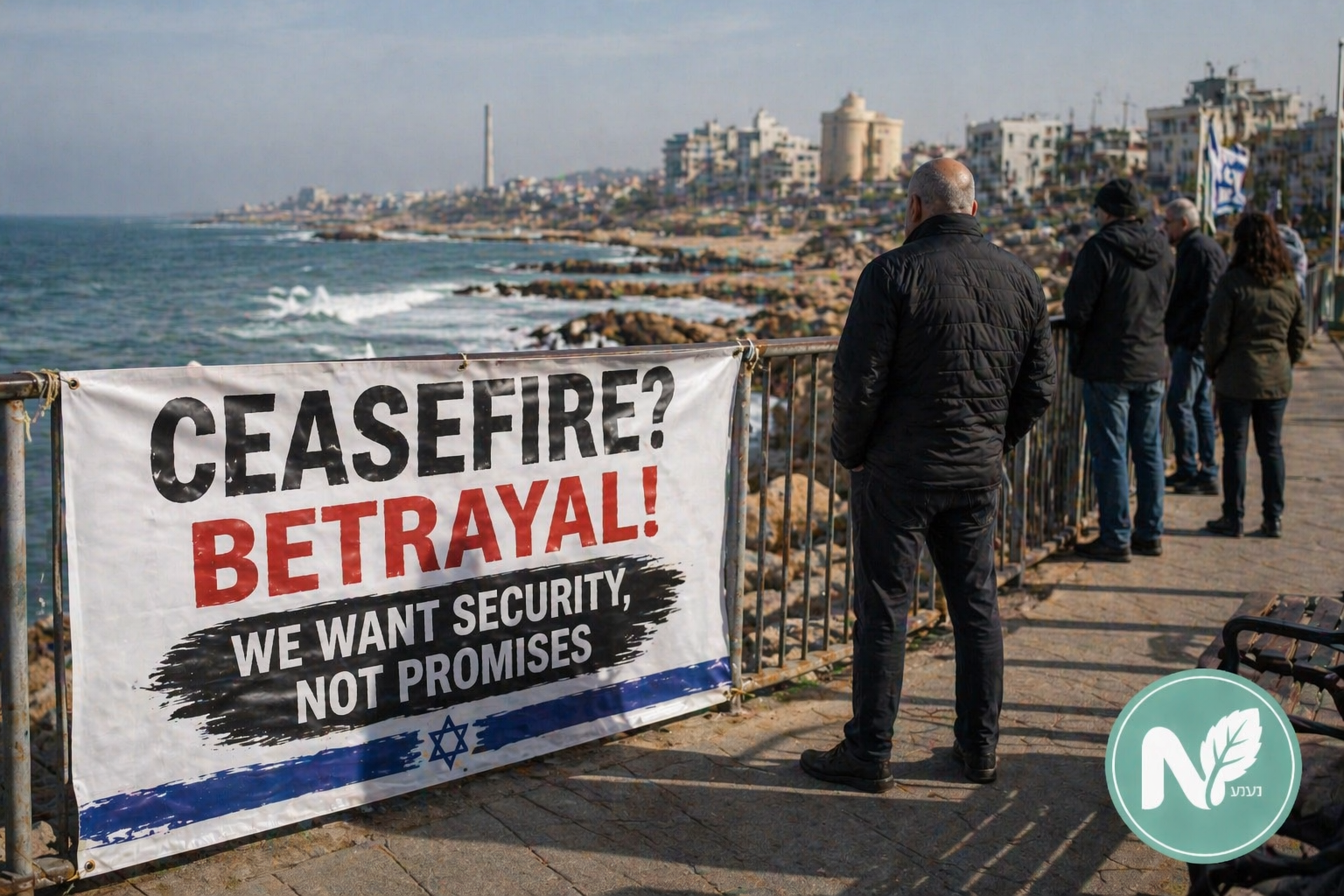
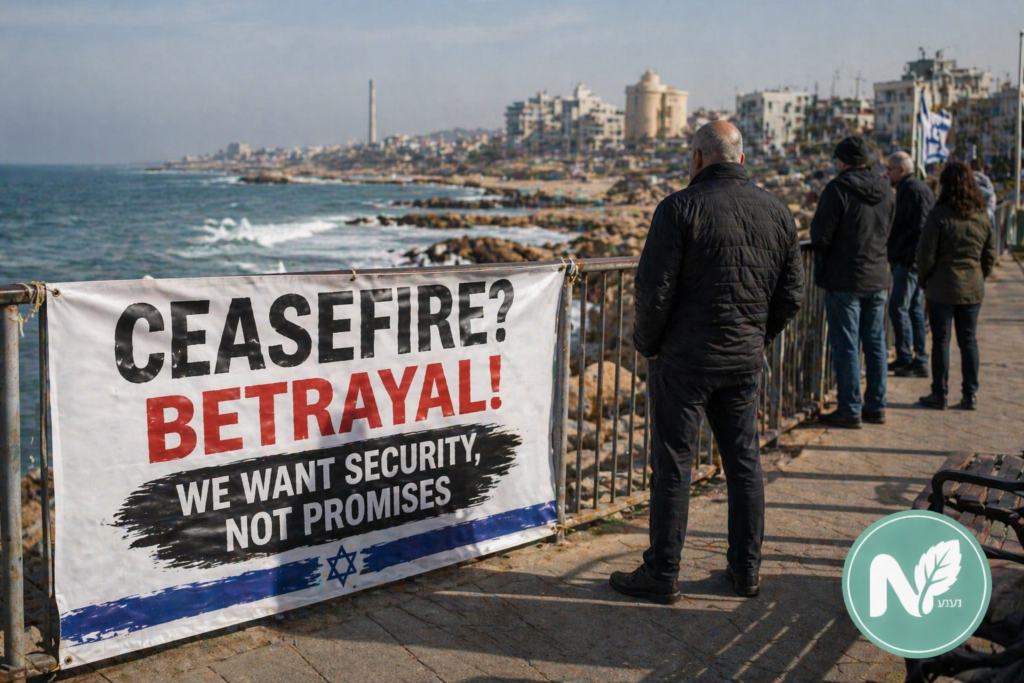
NAHARIYA — While international headlines tout a breakthrough in regional diplomacy, the sentiment on the ground in the Western Galilee is one of betrayal and deep skepticism. Local leaders and residents of frontline communities, including Nahariya and the surrounding regional councils, have reacted with sharp criticism to the announced 10-day ceasefire between Israel and Hezbollah.
The agreement, reportedly brokered by the United States and set to take effect at midnight, has sparked a firestorm among those who have spent months under the threat of rocket fire and evacuation orders.
“Not an Achievement, But a Risk”
Moshe Davidovich, head of the Mateh Asher Regional Council—which encompasses dozens of communities surrounding Nahariya—delivered a stinging rebuke of the diplomatic move. As chairman of the Confrontation Line Forum, Davidovich argued that a ceasefire without the verified dismantling of Hezbollah’s infrastructure up to the Litani River is a dangerous gamble.
“The residents of the north are not mere statistics in a show of international public relations,” Davidovich stated, emphasizing that any deal signed in Washington carries a heavy cost for those living on the border. He warned that without strict enforcement, the agreement is “not a diplomatic achievement” but rather a precursor to further violence.
Skepticism Across the Galilee
The sentiment was echoed by other regional leaders who described the ceasefire as a “pause between rounds” rather than a path to lasting peace. Asaf Langalben, head of the Upper Galilee Regional Council, noted that residents cannot return to a routine of fear. He stressed that the government’s primary responsibility is to ensure security conditions that prevent future rocket fire, a goal many feel is currently unmet.
In the Ma’ale Yosef Regional Council, head Shimon Guetta dismissed “agreements on paper,” noting that the community has already “paid the price in blood.” He asserted that unless Hezbollah is completely disarmed, any diplomatic gesture is meaningless to the families who have lost homes and loved ones.
The Impact on Nahariya and Frontline Cities
For residents of Nahariya, the city most targeted by recent barrages, the ceasefire news is met with a mixture of exhaustion and anxiety. While a pause in sirens is a relief, the lack of a “security zone” or a permanent solution leaves many feeling that the threat has simply been deferred.
Local officials in Kfar Vradim and Merom HaGalil added that linking the Lebanese front to broader tensions with Iran risks turning the North into a permanent buffer zone. They expressed hope that Prime Minister Netanyahu’s previous commitments to develop and strengthen the North would finally see material investment, rather than just rhetoric.
A Wait-and-See Approach
As the midnight deadline approaches, the Western Galilee remains in a state of high alert. Security assessments suggest that Hezbollah may attempt to increase fire intensity in the final hours before the truce—a common tactic used to claim the “last word” in a conflict.
For the English-speaking community in the North, the message from local leadership is clear: the diplomatic “quiet” is viewed with extreme caution. Residents are advised to maintain their readiness and follow all Home Front Command instructions, as the price of a failed ceasefire is one they are not prepared to pay again.